The State of AI in Endurance Coaching
The AI coaching market is growing fast. Most of what's out there doesn't deserve the name - COACH. Here's a framework for understanding what exists, what works, and what's coming next.
ED CROSSMAN & COLIN NORRIS
9 MIN
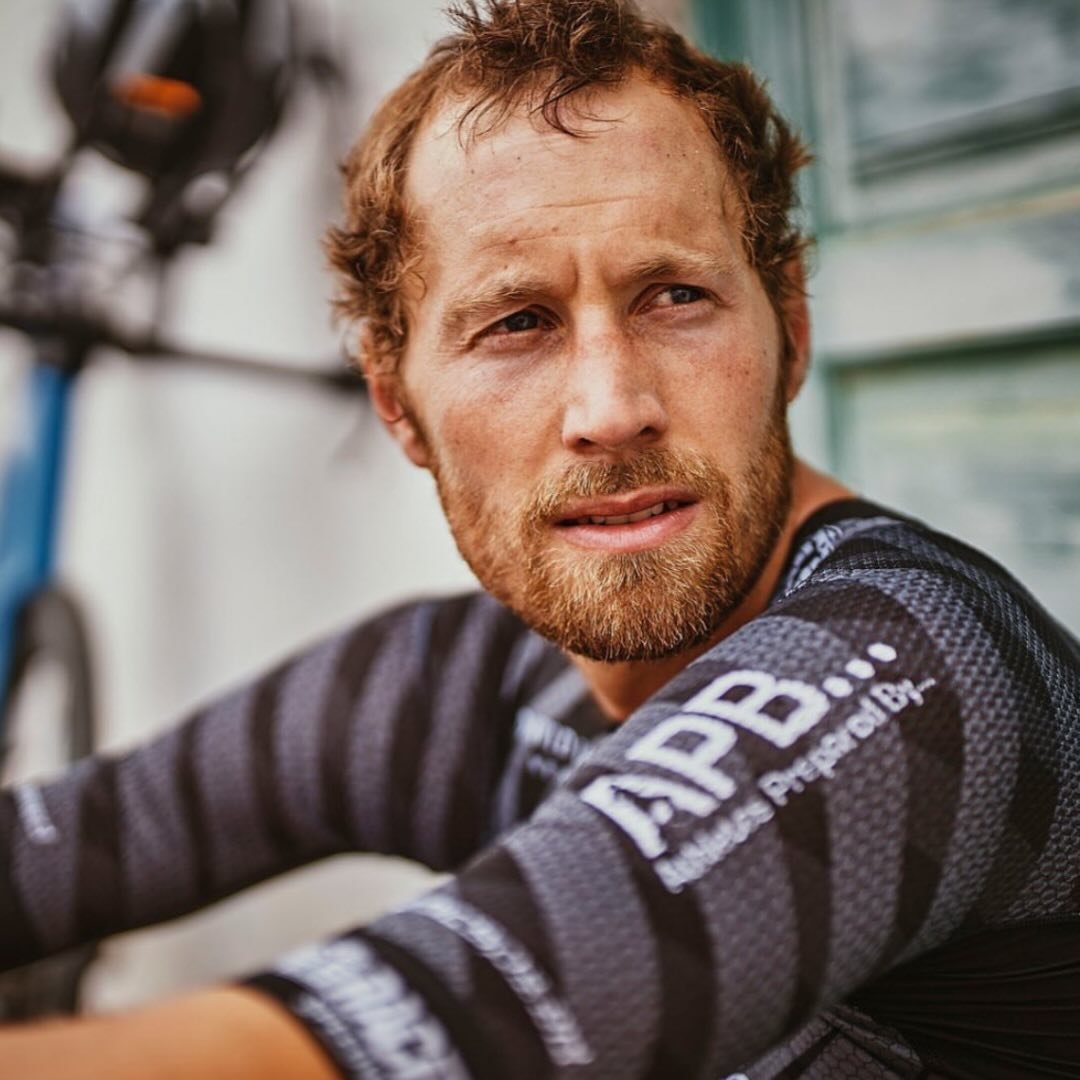
Colin Norris
Ex professional triathlete and coach
Read More
Something has shifted in the last eighteen months. The number of products calling themselves AI coaching for endurance athletes has grown from a handful to dozens. Garmin, Apple, and COROS have all added AI-driven features to their ecosystems. Startups are raising venture capital on the promise of replacing the human coach. And the athletes themselves, the runners, cyclists, triathletes, and ultra-distance competitors who fuel this market, are paying attention.
The endurance sports market is now valued at over $12 billion globally, driven by record participation across nearly every discipline. Marathon participation in the US hit 432,000 finishers in 2024, up 5% year-over-year. HYROX went from niche to mainstream in three years. Ultra running and gravel cycling are booming. And nearly all of these athletes own a wearable device generating continuous physiological data that, until recently, nothing was smart enough to use.
The convergence of these two trends, a massive and growing athlete population generating unprecedented amounts of data, alongside AI systems capable of interpreting that data in context, is what makes this moment different from previous waves of fitness technology. The question is no longer whether AI can play a role in coaching. It's whether the products being built today are doing it well enough to matter.
Most of them aren't. Not yet.
The coaching gap AI is trying to close
The fundamental problem is well-documented. Roughly 95% of endurance athletes train without individualised coaching. The reasons are structural: qualified coaching costs $150 to $500 per month, the market is unregulated so quality is inconsistent, and even great coaches can only manage 20 to 30 athletes at a time. The result is that the vast majority of serious recreational athletes rely on static plans that don't know them, don't adapt to their lives, and can't prevent the training errors that cause the majority of running injuries.
This isn't a niche problem. It's the central bottleneck in endurance sport. The coaching wisdom exists. The training science is well understood. The data is being collected. What's been missing is the delivery mechanism: something that can take what a great coach knows, combine it with what your body is telling you, and produce daily training decisions that are genuinely individualised. AI is the first technology with the potential to do this at scale.
But "AI coaching" has become one of those phrases that means everything and nothing. The products on the market today span an enormous range of sophistication, from basic automation dressed in AI branding to genuinely intelligent systems that reason about athlete data in context. Understanding where a product sits on that spectrum is essential for any athlete evaluating their options.
How AI coaching products actually work
Broadly, the current landscape falls into three categories. These aren't marketing labels. They describe fundamentally different technical approaches, each with distinct capabilities and limitations.
Category 1: Plan generation with conversational AI. The most common approach. You answer a questionnaire about your goals, fitness level, and schedule. An algorithm generates a training plan. Alongside it, a chatbot (typically powered by a large language model) answers your questions, offers encouragement, and can explain the rationale behind sessions. Some of these products are polished and the plans they generate are physiologically sound. But the AI isn't coaching you. It's generating a plan and then talking about it. The plan itself is static once created, or updates only when you re-enter information. This is a meaningful step up from downloading a PDF, but the coaching is in the conversation, not the adaptation.
Category 2: Rule-based adaptive systems. These products adjust your training based on predetermined rules. If you miss a session, the system redistributes load. If your fitness test improves, it adjusts your targets. If your HRV drops below a threshold, it flags a rest day. The rules are typically sound, grounded in established training science, and the result is a genuinely adaptive experience in the mechanical sense. The limitation is that rule-based systems can only respond to scenarios their designers anticipated. They don't reason about novel situations. They don't weigh competing signals. And they can't understand context: the system knows your HRV is suppressed but doesn't know why, which means the response is the same whether you're fighting an infection or recovering normally from a hard session.
Category 3: Contextual AI coaching. The emerging category, and the one that represents a genuine departure from what came before. These systems combine physiological rules (the established training science that should be hard-coded, not left to AI judgment), machine learning on individual athlete data (learning how you specifically respond to training over time), and large language model reasoning (the ability to synthesise multiple data streams, understand natural language context, and make nuanced daily decisions). The key distinction is contextual interpretation. Rather than applying a rule when HRV drops, the system asks why it dropped, how that fits with your recent training load, sleep, and life context, and what the appropriate response is given where you are in your training cycle and what sits downstream. We explored this process in detail in a previous article.
These categories are not a quality ranking. A well-built Category 1 product with excellent programming can outperform a poorly built Category 3 product. The categories describe capability, not execution. But they do define the ceiling of what each approach can achieve, and the ceiling matters as the demands on the system increase.
What separates good from bad
Regardless of category, the quality of an AI coaching product depends on a few things that athletes should look for and that too many products get wrong.
Physiological grounding. Does the system respect established training science? Progressive overload, intensity distribution, acute-to-chronic workload ratios, taper protocols: these principles are well-established and should form the non-negotiable foundation. An AI system that overrides these principles because its language model had a creative idea is a system that will eventually hurt someone. The science should be the guardrail, not the suggestion.
Data integration depth. How many signals does the system actually use, and how deeply does it integrate them? A product that reads your training log but ignores your sleep, HRV, resting heart rate, and subjective feel is making decisions with a fraction of the available information. The multi-signal picture, HRV alongside sleep, load, pace trends, and how you actually feel, is what transforms a confusing daily number into a genuine training decision.
Transparency. Can the system explain why it made a decision? This is non-negotiable. An athlete who understands why their session changed is an athlete who trusts the system and follows the adjusted plan. An athlete who sees their workout swapped with no explanation is an athlete who overrides the system and does the intervals anyway. If the AI can't articulate its reasoning, it's a black box, and athletes shouldn't trust a black box with their health.
Longitudinal learning. Does the system get better at coaching you over time? Your individual response to training is unique: how quickly you recover, how much sleep disruption you can tolerate, how your body handles heat, what your injury patterns look like. A system that learns these patterns from your historical data is genuinely personalised. A system that treats you the same way on day one as on day three hundred is not, regardless of what the marketing says.
Subjective input. Does the system ask how you feel, and does it actually use the answer? Subjective experience remains one of the most valuable data points in coaching. Sometimes you know something is off before any metric confirms it. Sometimes your numbers look suppressed but you feel genuinely ready to go. A system that ignores this, relying entirely on objective data, is missing a signal that every great human coach considers essential.
The limitations of where we are today
It's worth being honest about what AI coaching cannot yet do well, because overclaiming is the fastest way to erode athlete trust.
Early-stage personalisation is limited. Most systems need weeks or months of data before they can model your individual response patterns reliably. The first few weeks of using any AI coaching product will feel more generic than personalised, because the system is still learning. This is an honest limitation, not a flaw, but products that oversell personalisation from day one are setting expectations they can't meet.
Life context remains hard to capture. Your watch knows your heart rate and your sleep. It doesn't know about the work deadline that's been keeping you up, the family stress that's sapping your energy, or the fact that you're dreading your long run because it's the same route you've done twelve times. Some systems use check-ins and natural language interaction to capture this, but the richness of context that a human coach absorbs through conversation and observation is still difficult to replicate fully.
Injury prediction is a promise, not a reality. Several products claim to predict injuries before they happen. The honest state of the science is that we can identify elevated risk, primarily through training load spikes and inadequate recovery, but true injury prediction at the individual level remains beyond what current data and models can reliably deliver. Reducing injury risk through better load management is real and evidence-based. Predicting that your Achilles will fail on Thursday is not.
The human element hasn't been fully replaced. For athletes dealing with complex injury rehabilitation, significant psychological barriers, or elite-level performance where the margins are measured in seconds, a skilled human coach still offers dimensions of support that AI cannot match. The most honest framing is that AI coaching serves the 95% who have no coaching at all far better than the static plans they're currently using, while complementing rather than replacing the 5% who already have a strong human coaching relationship.
Where the technology is heading
Three developments will define the next two to three years.
Deeper wearable integration. As manufacturers continue to open their APIs and sensor technology improves, the data available to coaching systems will expand. Continuous glucose monitoring, core body temperature, muscle oxygenation, and more granular sleep staging will add new dimensions to the multi-signal picture. The systems that can integrate these signals meaningfully, rather than just displaying them, will pull ahead.
True multi-sport and multi-stressor reasoning. Most current systems handle single-sport training reasonably well. The next frontier is reasoning across the full load an athlete carries: training across multiple disciplines, strength work, life stress, travel, nutrition, and cumulative fatigue that spans weeks rather than days. This requires models that understand the interaction between stressors, not just each one in isolation.
Collaborative human-AI coaching. Rather than AI replacing human coaches, the more likely near-term outcome is augmentation. AI handles the data-intensive daily adjustments, freeing the human coach to focus on the relationship, the psychological dimension, and the strategic decisions that benefit from experience and intuition. This hybrid model may prove to be the best of both worlds, and it's where the economics of coaching could finally shift in the athlete's favour.
A framework for evaluating AI coaching products
If you're an athlete considering an AI coaching tool, five questions will tell you most of what you need to know:
Does it actually change my training based on my data, or just based on my answers to a questionnaire? Does it integrate with the devices I already own and use the full range of data they produce? Can it explain why it's recommending a particular session or adjustment? Does it get smarter about me specifically over time? And does it have guardrails, rooted in established exercise science, that prevent it from doing something dangerous with my health?
If the answer to all five is yes, you're looking at a product that's doing something genuinely new. If the answer to most of them is no, you're looking at a plan generator with good marketing.
The technology to deliver real coaching at scale is here. Not perfect, not finished, but real and improving rapidly. The athletes who benefit most will be the ones who understand what to look for, and what to demand, from the tools they trust with their training.
Zepho is adaptive coaching for serious runners. It's live and available now on the App Store.